
Is Sterling Silver Jewelry Durable? A Realistic Guide
Table of Contents
- What Sterling Silver Is and Why 925 Matters
- Is Sterling Silver Jewelry Durable for Daily Wear
- How Long Does Sterling Silver Last
- Sterling Silver Tarnish Prevention and Care
- How to Clean Sterling Silver Jewelry
- Wear, Scratches, and Realistic Damage to Expect
- Conclusion: Sterling Silver Durability and Your Handcrafted Pieces
- Frequently Asked Questions
Last Updated: October 12, 2026
What Sterling Silver Is and Why 925 Matters
Sterling silver is an alloy, not pure metal. It contains 92.5% pure silver mixed with other metals, typically copper. That 92.5% purity is why you see "925" stamped on quality pieces. The remaining 7.5% is what makes sterling silver practical for jewelry.
Pure silver alone is too soft. It bends easily, scratches quickly, and won't hold a stone securely. Adding copper creates strength without sacrificing the beauty and value of real silver.
The 925 hallmark matters because it guarantees authenticity. When you buy from Cactus Rose Jewelry, that stamp tells you exactly what you're getting: genuine sterling silver, not plated silver or a lower-grade alloy. It's a commitment to quality that handcrafted pieces deserve.
Is Sterling Silver Jewelry Durable for Daily Wear
Yes, sterling silver is durable enough for everyday wear. The copper in the alloy gives it real strength compared to pure silver. You can wear sterling silver rings, necklaces, bracelets, and earrings regularly without them falling apart after a few months.
But "durable" doesn't mean indestructible. Sterling silver is softer than white gold, stainless steel, or platinum. It will scratch and dent if you bang it around. The key is understanding what that actually means for your life.
How Sterling Silver Compares to Fine Silver and Other Metals
Fine silver is 99.9% pure. It's beautiful, but it's too soft for most jewelry. A fine silver ring would bend out of shape just from normal wear. Sterling silver solves this problem by adding strength while keeping the real silver content high.
Compared to other metals, sterling silver sits in the middle. It's stronger than fine silver but softer than gold or stainless steel.
Stainless steel is harder and more scratch-resistant, but it's not precious metal. Platinum is stronger than sterling silver and won't tarnish, but it costs significantly more. White gold offers similar durability to platinum with a lower price, though still higher than sterling silver.
Durability by Jewelry Type and Construction
Not all sterling silver jewelry is built the same way. A thick, solid band will hold up better than a thin, delicate chain. The way a piece is constructed matters as much as the metal itself.
Rings take the most wear. They get bumped constantly, twisted, and compressed. A well-made sterling silver ring with a sturdy band can last decades with proper care.
Necklaces and bracelets face different stresses. They stretch, get caught, and tangle. A well-made chain with secure clasps will endure years of wear.
Earrings are generally the most durable because they see less physical stress than rings. Small studs or simple drops can last a lifetime.
How Long Does Sterling Silver Last
Sterling silver jewelry can last a lifetime. Many pieces pass through families for generations. The metal itself doesn't degrade or expire. What changes is the surface finish and the structural integrity of the piece.
A well-made sterling silver ring might show visible scratches after five to ten years of daily wear. A necklace might last twenty years before the chain weakens. These timelines depend entirely on how you wear the piece and how well you care for it.
The real durability question isn't about the metal breaking down. It's about whether the piece will hold its shape, keep stones secure, and look good.
Sterling Silver Tarnish Prevention and Care
Most articles stop at "tarnish is not rust." That's true, but it doesn't help you decide whether the dark film on your ring is a five-minute polish job or a sign of real damage. This section separates the two, then covers the wear conditions that actually drive both.
Tarnish Versus Structural Damage
These are different problems with different fixes. Knowing which one you're looking at tells you whether to reach for a polishing cloth or a jeweler.
Tarnish (reversible). A dark or yellowish film on the surface, caused by silver reacting with sulfur compounds in air, sweat, and some foods. It sits on top of the metal.
Structural damage (not reversible by cleaning). Scratches that catch a fingernail, dents, bent bands, worn-through plating on a plated piece, stretched or broken chain links, loose prongs, and clasps that no longer snap shut.
A quick test: if the mark comes off with a soft cloth and mild soap, it's tarnish. If it doesn't, it's wear or damage.
Wear Conditions That Affect Durability
Where and how you wear sterling silver matters more than the alloy itself. The same ring can last five years or fifty depending on exposure.
- Water and swimming pools. Chlorine is the bigger concern than water itself. Pool chlorine and hot-tub chemicals accelerate tarnish and can pit the surface over repeated exposure. Remove sterling before swimming or soaking.
- Sweat. Sweat contains sulfur compounds and salts that speed tarnishing. This is why rings and bracelets worn daily tarnish faster than earrings. Rinsing and drying after heavy sweating helps.
- Household chemicals. Bleach, ammonia, and abrasive cleaners are the harshest common exposures. They can discolor sterling and damage stones and finishes. Wear gloves or remove jewelry before cleaning.
- Cosmetics and personal care. Lotions, sunscreen, hairspray, and perfume leave residues that dull the surface and trap tarnish-causing compounds. A common pattern is to apply these first, let them dry, then put jewelry on.
- Friction and impact. Rings and bracelets see the most. Repeated contact with desks, gym equipment, and hard surfaces produces the fine scratches that eventually dull a polish. This is normal aging, not a defect.
- Storage environment. Air, humidity, and sulfur-containing materials (rubber bands, some papers, wool) accelerate tarnish. Airtight bags and anti-tarnish strips slow it dramatically.
A Simple Care Routine That Preserves Durability
The goal of care is not just to keep the piece shiny, it's to prevent the wear that shortens its life.
- Wear it often. Counterintuitively, pieces worn regularly tarnish more slowly than pieces stored away, because skin oils and gentle friction interfere with tarnish formation. Rotate pieces you want to keep in good condition.
- Put jewelry on last, take it off first. After lotion, perfume, and hairspray have dried; before washing dishes, cleaning, swimming, or working out.
- Wipe after wear. A quick pass with a soft cloth removes skin oils and residue before they set.
- Clean gently. Warm water with a drop of mild dish soap, a soft cloth or soft-bristled brush, then dry completely. For heavier tarnish, a treated silver polishing cloth used in one direction.
- Store dry and sealed. Airtight bags or a lined jewelry box, away from humidity and direct sun. Anti-tarnish strips help in humid climates.
- Inspect periodically. Check prongs, clasps, and chain links every few months. Catching a loose prong before a stone falls out is far cheaper than replacing the stone.
What Not to Use
Abrasive and acidic cleaners do more harm than good on sterling silver.
- Toothpaste and baking soda. Too abrasive. They scratch the surface and leave a dull finish that requires professional polishing to correct.
- Vinegar and lemon juice. Acidic. They can damage the metal surface and harm many gemstones.
- Harsh dipping solutions. Some strip tarnish quickly but can damage delicate finishes, oxidized details, and porous stones. Use only on plain sterling with no stones or intentional darkening.
- Ultrasonic cleaners. Fine for some pieces, risky for others. They can loosen settings and damage certain stones. Check with a jeweler before using one on a piece with stones.
How to Clean Sterling Silver Jewelry
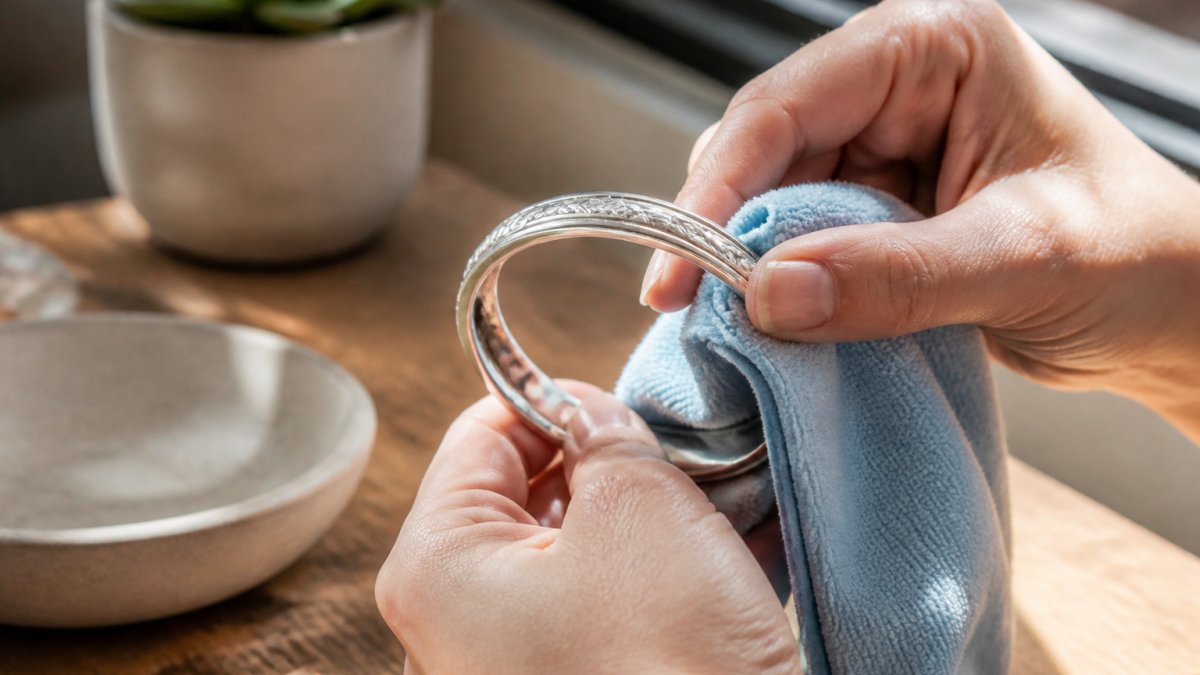
Gentle cleaning keeps sterling silver looking new without damaging it. Start with warm water and mild dish soap. Use a soft cloth or a soft-bristled brush.
For heavier tarnish, try a silver polishing cloth. These cloths are treated with mild chemicals that remove tarnish safely.
Avoid dipping solutions or harsh scrubbing. These can scratch the surface or damage delicate details. For pieces with gemstones, never soak them.
Never use toothpaste or baking soda on sterling silver. These are too abrasive and will scratch the surface. Don't use vinegar or lemon juice either.
After cleaning, dry everything completely with a soft cloth. Any remaining moisture speeds up tarnishing. Store the piece in a dry place.
Wear, Scratches, and Realistic Damage to Expect
Scratches happen. A sterling silver ring worn daily will develop fine scratches over time. These are cosmetic.
Small dents can occur from impacts. A ring bumped against a hard surface might show a small dent.
Clasps and closures wear out. A necklace clasp that's opened and closed hundreds of times might eventually weaken. Bracelets with push clasps can become loose.
Prongs that hold stones can loosen over time. This is why regular inspection matters. A loose stone can fall out and be lost.
The good news is that sterling silver is repairable. Unlike some materials, a damaged sterling silver piece can usually be fixed by a skilled jeweler.
| Damage Type | Cause | Severity | Repairability |
|---|---|---|---|
| Surface scratches | Daily wear and contact | Cosmetic only | Not necessary; part of aging |
| Small dents | Impact or pressure | Minor | Usually repairable by jeweler |
| Loose clasps | Repeated opening/closing | Functional | Easily replaced |
| Loose prongs | Wear over time | Serious (stone risk) | Tightened or replaced |
| Broken chain links | Pulling or snagging | Moderate | Repairable or replaceable |
| Tarnish buildup | Air and moisture exposure | Cosmetic only | Easily cleaned |
Conclusion: Sterling Silver Durability and Your Handcrafted Pieces
Sterling silver jewelry durable for everyday wear is genuinely reliable. The 925 alloy provides real strength without sacrificing the beauty of precious metal. You can wear handcrafted sterling silver pieces for years, even decades, with proper care.
The secret to longevity is understanding what durability actually means. It's not about never scratching or denting. It's about owning a piece that holds its shape, keeps stones secure, and looks beautiful through years of real life.
At Cactus Rose Jewelry, we craft sterling silver pieces built to last. Our handcrafted rings, necklaces, and earrings use solid construction and authentic materials.
Take care of your pieces. Store them properly, clean them gently, and wear them often.
Frequently Asked Questions
Is sterling silver durable enough for everyday wear?
Yes, sterling silver is suitable for everyday wear because it contains 92.5% pure silver combined with copper and other metals that add strength. However, it is softer than gold or stainless steel, so pieces will show wear over time. Scratches and scuffs are normal and do not affect the metal's integrity. Proper storage and occasional cleaning help maintain appearance. Handcrafted pieces with solid construction hold up especially well when worn regularly.
How long does sterling silver last with proper care?
Sterling silver jewelry can last a lifetime or longer with appropriate care. The metal itself does not degrade, but surface tarnishing occurs over time due to exposure to oxygen and sulfur compounds. Tarnish is cosmetic and easily removed through cleaning. Structural damage like bent prongs or weakened joints depends on jewelry construction and wear patterns. Regular maintenance, proper storage in a dry environment, and avoiding harsh chemicals extend the lifespan significantly.
Can you wear sterling silver jewelry in water or the shower?
Occasional water exposure is safe, but frequent shower wear is not recommended. Chlorine in pools and hot water can accelerate tarnishing. Saltwater speeds oxidation. Remove sterling silver before swimming or prolonged water activities. For daily wear pieces like rings or bracelets, occasional hand washing is fine. Dry the jewelry immediately after any water contact.
How do you prevent sterling silver from tarnishing?
Store sterling silver in a cool, dry place away from humidity and air exposure. Use anti-tarnish bags or cloth wraps to minimize oxygen contact. Avoid storing in bathrooms where moisture is high. Wear your jewelry regularly, as skin oils naturally protect the surface. Keep pieces away from perfume, lotions, and cleaning products that contain sulfur compounds. Clean and dry jewelry promptly after wearing. For long-term storage, use silica gel packets inside sealed containers.
Sterling silver durability comes down to quality construction and proper care. Cactus Rose Jewelry specializes in handcrafted sterling silver pieces designed for real life. Our artisanal approach means each piece is built with structural integrity, authentic materials, and attention to detail. Explore our collection of Southwestern-inspired jewelry and discover pieces that combine lasting beauty with genuine craftsmanship.