
Handmade Copper Necklaces: Styles, Quality & Care
Table of Contents
- What Makes Handmade Copper Necklaces Stand Out
- How to Tell If a Necklace Is Real Copper
- Popular Handmade Copper Necklace Styles
- Copper Necklace Care and Cleaning
- Copper Gemstone Jewelry: Quality and Durability
- Skin Sensitivity and Copper Jewelry Wear
- Handmade Copper Necklaces for Every Occasion
- Frequently Asked Questions
Last Updated: October 19, 2026
What Makes Handmade Copper Necklaces Stand Out
Handmade copper necklaces have become increasingly popular among jewelry collectors and fashion enthusiasts who value authenticity and craftsmanship. The handmade jewelry market was forecast to grow from $203.8 billion in 2024 to $594.3 billion by 2034, at an approximately 11.3% compound annual growth rate, according to Global Insight Services' Handmade Jewelry Market Analysis and Forecast.
What separates genuine handmade copper necklaces from mass-produced alternatives is how the metal is worked, how stones are set, and how much care goes into each stage.
Artisan Construction vs. Mass Production
Artisan-made copper jewelry involves hands-on craftsmanship at every step.
Mass-produced necklaces prioritize consistency and speed: machines stamp identical pendants from copper sheets, and stones are often glued rather than mechanically set, keeping costs lower but sacrificing quality.
The real advantage of handcrafted construction shows up in durability and repairability. A poorly soldered joint or hastily set stone fails quickly, while a well-executed handmade piece can be worn for years and repaired by another skilled craftsperson.
Copper Types and Material Quality
Not all copper is created equal. Understanding the differences helps you assess what you're buying.
Raw copper is unfinished, unpolished copper that shows its natural state, often displaying hammer marks, texture, and organic variation.
Recycled copper is reclaimed from other sources and reformed into new jewelry, carrying the same properties as newly mined copper while reflecting a commitment to sustainability.
Plated copper is a thin layer of copper over a base metal (usually brass or nickel).
How to Tell If a Necklace Is Real Copper
Identifying authentic copper jewelry protects you from overpaying for plated imitations.
Identifying Solid vs. Plated Copper
Weight and feel offer the first clue. Solid copper is substantially heavier than plated versions because the entire piece is copper.
Color consistency matters. Solid copper shows the same color throughout, while a bright, uniform orange-red surface with no variation often signals plating.
Magnetic response is a practical test. Pure copper is non-magnetic; if a magnet sticks, the piece contains significant nickel or iron, a sign it's plated or a cheap alloy.
Patina development is the ultimate proof. Solid copper oxidizes naturally over weeks and months, developing a darker or greenish tint, which is normal and desirable.
Checking for Authentic Gemstone Accents
Gemstones add significant value to handmade copper necklaces. Verifying authenticity protects your investment.
Turquoise, the most common gemstone in Southwestern copper jewelry, varies dramatically in quality and price.
Weight and hardness distinguish real turquoise from imitations. Genuine turquoise is relatively lightweight but firm, while plastic imitations feel hollow. Run a fingernail across the stone: real turquoise resists scratching, while plastic or resin scratches easily.
Color variation in authentic gemstones is normal; each piece of wild horse stone, turquoise, or spiny oyster carries unique markings. If every stone looks identical, they're likely synthetic or heavily treated.
Popular Handmade Copper Necklace Styles
Handmade copper necklaces come in distinct styles suited to different occasions and aesthetics.
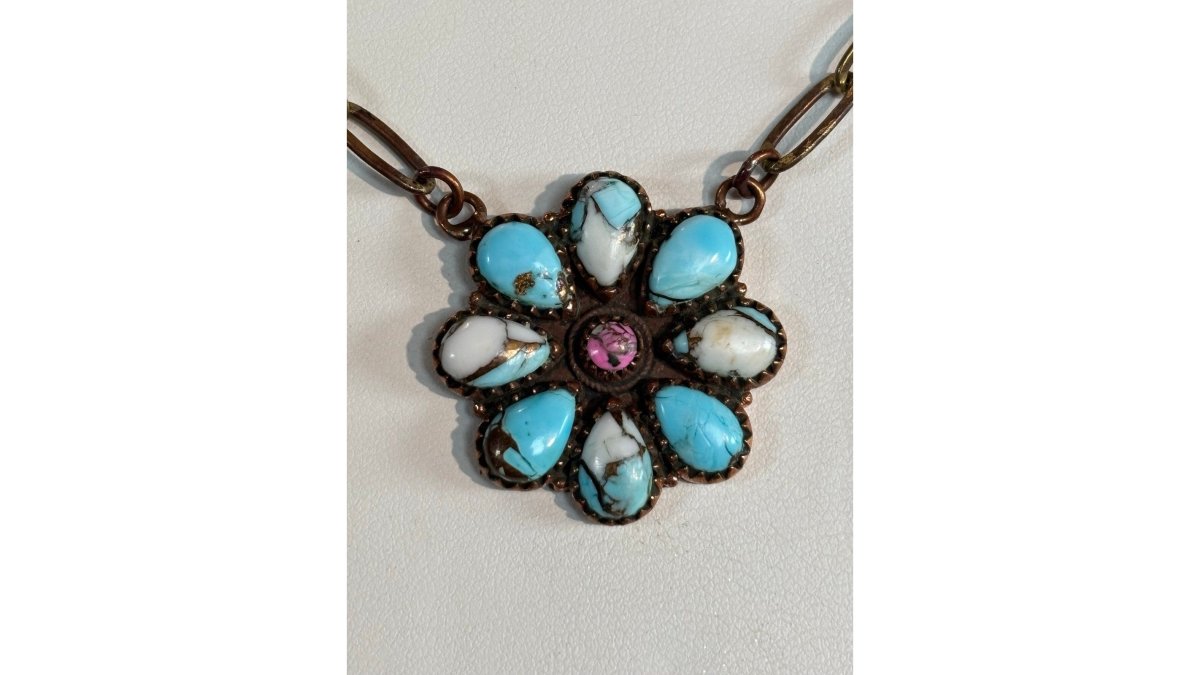
Cluster Pendants with Turquoise and Gemstones
Cluster pendants feature multiple stones arranged in a unified design, typically mimicking a flower or organic shape, making bold statements while remaining versatile enough for everyday wear.

The appeal of cluster designs lies in their visual impact and interplay of colors and textures.
Our Cotton Candy Turquoise Cluster necklace set in Copper 18" combines vibrant turquoise petals with a rich purple center stone, all set in antiqued sterling silver with an 18-inch adjustable copper paperclip chain.
The Wild Horse Stone Copper Cluster Necklace features six round stones in a floral cluster, set in warm copper with an adjustable 22-inch chain.
Statement Pieces and Layering Options
Statement copper necklaces prioritize bold design and presence, working best worn alone or as the focal point of a layered combination.
The Mohave Turquoise & Spiny Oyster in Copper with Paper Clip Chain exemplifies statement-style design. Its heart-shaped pendant blends turquoise, spiny oyster, and white stone tones set in detailed copper on a 20-inch chain, bringing Southwestern charm and artisan craftsmanship together in one eye-catching design.
Layering multiple copper necklaces creates dimension and personal style.
Chain Styles and Necklace Lengths
The chain you choose affects both the necklace's appearance and how it sits on your body. Copper paperclip chains have become increasingly popular because they're sturdy, visually interesting, and complement both rustic and refined aesthetics.
Necklace length determines how the pendant falls and which necklines it complements:
- 16-18 inches: Sits at the collarbone, ideal for high necklines or layering
- 20-22 inches: Falls at the chest, works with most necklines and is the most versatile length
- 24-26 inches: Falls lower on the body, creates an elongating effect, perfect for petite frames or dramatic statement pieces
Adjustable chains offer flexibility. Many handmade copper necklaces feature paperclip or open-link chains that allow you to shorten or lengthen the necklace by several inches, so one necklace works with different outfits and occasions.
Copper Necklace Care and Cleaning
Proper care extends the life of your handmade copper jewelry and preserves its beauty.
Copper and Turquoise Cluster Necklace on a beautiful paper clip chain →
Managing Tarnish and Oxidation
Copper naturally oxidizes when exposed to air and moisture, developing a darker patina or greenish tint. This process is normal and, for many people, desirable, adding character and authenticity. If you prefer the bright copper look, you can manage oxidation.
Prevention is the easiest approach. Store your copper necklace in a dry place, ideally in a sealed bag or container with a silica gel packet to absorb moisture.
Gentle cleaning removes light tarnish without damaging the metal or gemstones. Mix warm water with a small amount of mild dish soap, wipe the copper with a soft cloth, then dry thoroughly.
Safe Cleaning Methods for Gemstone Settings
Gemstones require extra care during cleaning. Turquoise, wild horse stone, and spiny oyster are relatively delicate and can be damaged by harsh chemicals or excessive moisture.
Avoid soaking your necklace in water or cleaning solutions.
Never use ultrasonic cleaners or steam cleaners on copper necklaces with gemstones. The vibrations and heat can loosen stone settings or crack delicate stones.
Check settings regularly. Run your finger gently across each stone to ensure it's secure. If a stone feels loose, stop wearing the necklace and have it professionally re-set before further wear.
Copper Gemstone Jewelry: Quality and Durability
The longevity of a handmade copper necklace depends on both the copper quality and how well gemstones are set.
Quality handmade pieces use solid copper and genuine gemstones set with proper technique.
Durability also depends on the gemstones themselves. Turquoise ranks 5-6 on the Mohs hardness scale, making it relatively soft compared to diamonds (10) or sapphires (9), so it scratches more easily and requires gentler handling (Natural Gemstones).
Copper itself is durable and ages beautifully. Unlike silver, which can tarnish heavily, copper's natural patina is often considered an enhancement rather than a flaw.
Skin Sensitivity and Copper Jewelry Wear
Some people experience skin reactions when wearing copper jewelry. Understanding these reactions helps you make informed choices.
Copper sensitivity is relatively rare but real. Copper can cause a green discoloration on skin in some individuals, particularly in humid conditions or with prolonged contact.
Nickel content in copper alloys is a more common concern. Some copper jewelry contains nickel, which triggers allergic reactions in people with nickel sensitivity.
Prevention strategies include wearing a thin barrier between your skin and the necklace.
If you know you have metal sensitivities, discuss this with the artisan before purchasing.
Handmade Copper Necklaces for Every Occasion
Handmade copper necklaces adapt to different settings and purposes, from daily wear to special events.
Everyday Wear and Versatile Designs
The best everyday copper necklaces balance visual interest with practicality, complementing multiple outfits without requiring special occasions.
Subtle designs with smaller pendants and shorter chains work well for professional environments. A delicate copper chain with a small turquoise accent, for example, adds personality without overwhelming a business outfit. Earthy tones like wild horse stone's cream and brown coloring coordinate easily with neutral clothing.
Durability matters for everyday wear. Solid copper with secure gemstone settings handles daily contact with clothing, bags, and environmental elements without degrading.
Gift-Worthy Pieces with Authentic Craftsmanship
Handmade copper necklaces make meaningful gifts because they combine aesthetic appeal with the story of artisan creation. Each piece carries the maker's skill and intention.
When selecting a gift, consider the recipient's style preferences and lifestyle.
Consider also the recipient's skin tone and existing jewelry. Copper's warm tones complement deeper skin tones beautifully, while the contrast between copper and turquoise works across all complexions.
| Necklace Style | Best For | Chain Length | Price Range |
|---|---|---|---|
| Cluster Pendant | Statement wear, special occasions | 18-22 inches | $84-$109 |
| Wild Horse Stone | Everyday wear, neutral aesthetics | Adjustable to 22 inches | $89 |
| Heart Pendant | Gifts, romantic occasions | 20 inches | $84 |
| Copper & Turquoise | Layering, versatile styling | 18 inches | $94 |
Authenticity matters in gift-giving. A handmade piece carries genuine artisanal value that mass-produced jewelry cannot replicate.
Choosing genuine handmade copper necklaces means investing in pieces that reflect authentic artisanal skill and quality materials.
Frequently Asked Questions
How can I tell if a copper necklace is handmade and not mass-produced?
Genuine handmade copper necklaces show visible signs of artisan craftsmanship: slight variations in pendant shape, unique wire wrapping, hand-hammered textures, and natural oxidation patterns on the copper. Mass-produced pieces have uniform, identical details. Check the back of the pendant and chain for natural variations and oxidation marks, which indicate authentic handcrafting. Ask the maker for construction details and photos of their workspace. Handmade pieces are rarely perfectly identical, while factory items are stamped from molds.
How do I clean and care for a copper necklace without damaging gemstones?
For copper necklace care and cleaning, use a soft, dry cloth to gently buff away tarnish. For deeper cleaning, mix warm water with a few drops of mild dish soap and use a soft-bristled brush on the copper only, avoiding gemstone settings. Rinse with distilled water and dry immediately. Never soak gemstones in water or use harsh chemicals like vinegar or baking soda paste on turquoise or delicate stones. Store your necklace in a dry place away from moisture. For stubborn tarnish, consider professional cleaning to protect valuable gemstone accents.
Is it safe to wear copper jewelry if I have sensitive skin?
Copper can cause skin discoloration and irritation in people with sensitive skin or copper sensitivities. Wearing a copper necklace directly against your skin may leave temporary green or black marks. If you have known copper sensitivity, look for necklaces with a protective barrier, such as those with sterling silver components, or wear the necklace over clothing. Test a new copper piece by wearing it for short periods first. If you experience rash, itching, or persistent discoloration, discontinue wear and consult a dermatologist. Most people tolerate copper jewelry well without issues.
What is the difference between solid copper and recycled copper jewelry?
Solid copper jewelry is made from pure or near-pure copper (typically 99% or higher), offering durability and authentic color. Recycled copper comes from reclaimed copper sources and has the same properties as virgin copper, it's equally authentic and durable. Both solid and recycled copper develop natural patina and tarnish over time. The key difference is sourcing: recycled copper is more environmentally sustainable, while solid copper is newly refined. For handmade copper necklaces, both types provide genuine material quality. Check product descriptions to learn which type your necklace uses.
Why do handmade copper necklaces tarnish, and is that normal?
Copper necklaces tarnish and oxidize naturally when exposed to air and moisture, this is a normal chemical process and a sign of genuine copper. The tarnish appears as a dark patina on the surface, which many artisans intentionally preserve for authentic, rustic character. Some handmade pieces show natural oxidation on the back of the pendant and chain as part of their design. You can slow tarnishing by storing your necklace in a dry place and wearing it regularly. Tarnish doesn't damage the copper; it's purely cosmetic and can be cleaned off anytime.